
Piercing Guide and Terminology
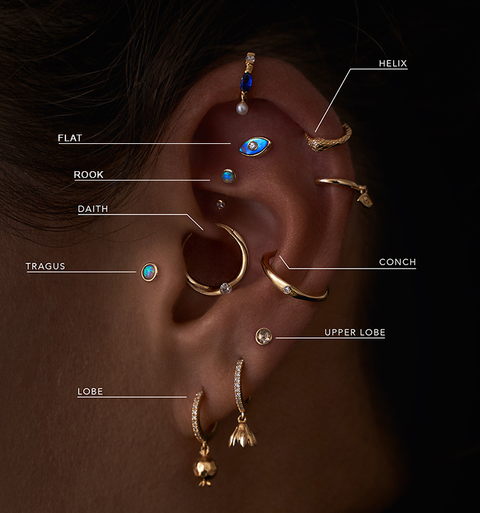
Lobe: The lobe is the lower section of the ear, which is one of the most common piercings.
Helix: The helix is positioned in the upper cartilage of the ear.
Forward Helix: The forward helix is placed on the curve on the outer portion of the ear.
Rook: The Rook is located in the cartilage of the upper ear. The rook piercing is performed in a vertical manner, allowing the rings and curved balls to face downward.
Daith: The daith is located within the inner fold above the ear canal. This is located between the rook and tragus, placed where the outer ridge of your ear meets your inner ear. Daith piercings usually are forward facing, so that the stones are clearly visible.
Tragus: The tragus is positioned on the outer cartilage area, which is located in the sector of the triangular flap. It is above the lobe and is the harder section of the ear on the side of your face.
Antitragus: The antitragus is in the outer cartilage area, and is the triangular flap above the lobe, opposite to the tragus piercing.
Conch: The conch is located in the middle section of the ear. This piercing can be performed on the inner or outer portion to the ear. The inner conch is located in the lower cartilage, while the outer conch is located sits in the upper area of the cartilage.
Septum: The middle part of the nose. Our huggies and clickers are great options for septum piercings.
Piercing Placements & Healing Times
- 2-4 Months
- 4-6 Months
- 6-12 Months
- 9-12 Months

Discover Our Piercing Jewelry


Discover Our Best Selling Piercing Jewelry


Closure Systems

Internal Threading
-
Push Pin
-
BARBELLS AND HOOKS
-
Hoops
-Materials
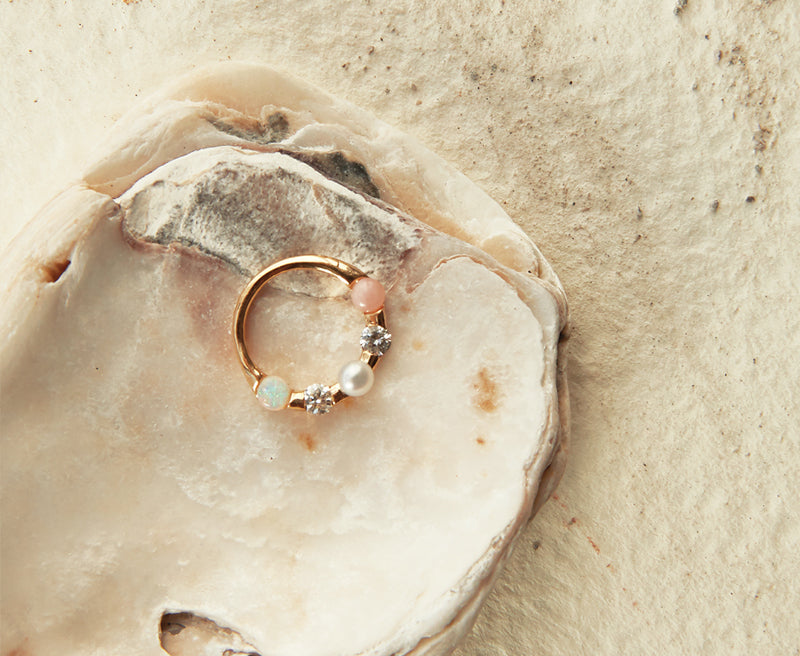
Metals: Our piercing collection is made from recycled 14k Gold. Our pieces are safe for getting pierced with and are hypoallergenic.
Stones: We use ethically sourced and conflict-free diamonds, precious stones and vibrant semi-precious stone inlays in our designs.


SIZE GUIDE FOR THREADED STUDS AND PUSH PIN STUDS
Length of the back post will depend on the thickness of ear or body part where piece will be worn.
A 5.5mm back post will fit a healed thin helix, a forward helix, a thin tragus, anti-tragus, or an earlobe of average thickness.
A 6.5mm back post will safely fit a helix of average thickness, tragus, rook, conch, thicker earlobes and in the nose. In certain cases, the length of post can also be used to be pierced with. If you are planning on getting pierced with our jewelry, please consult your piercer to see if an 6.5mm post is the right length for your desired placement.
An 8mm back post will often be the size to get pierced with (due to swelling). This will depend on the part of the lobe that is pierced.

WHICH OF OUR PIECES CAN YOU GET PIERCED WITH?
If you are planning on getting pierced with our pieces, threaded studs and push pin studs are ideal. In most cases, you will need a 8mm back post. However, there are some occassions where a 6.5mm back post would be suitable. Please consult your piercer to see which back post length is right for your desired placement.
Clickers, huggies (10mm and bigger) and hooks are only suitable for certain piercing placements, such as daith, conch and rook. If you are unsure, please consult your piercer.
You can safely use all of our piercing jewelry on your existing, healed piercings.
Best Selling Piercing


Frequently Asked Questions
What are the most common ear piercing placements? +
Common ear piercing placements include the lobe, upper lobe, helix, forward helix, flat, rook, daith, tragus, conch, and anti-tragus. The right placement depends on your anatomy, styling goals, and whether the piercing is new or healed.
How long do ear piercings take to heal? +
For information on healing times please visit our diagram here.
What jewelry is best for a new piercing? +
New piercings are typically started with studs and can be switched after they are completely healed. To ensure the best fit and safe healing, we recommend consulting a professional piercer regarding the correct post length for your anatomy.
Can I put a hoop in a new piercing? +
Some placements can be pierced with a hoop, but many new piercings heal better with a properly fitted stud. Ask your piercer which jewelry style is safest for your placement, anatomy, and healing stage.
When can I change my piercing jewelry? +
You should wait until your piercing is fully healed before changing jewelry unless your piercer recommends a professional downsize or adjustment. Changing jewelry too early can irritate the piercing or slow healing.
What is the difference between internally threaded, push-pin, and clicker jewelry? +
Internally threaded jewelry screws into the post, push-pin jewelry uses tension between the pin and post, and clicker jewelry opens and closes with a hinge. Each closure works differently and may be better suited to specific placements.
Visit closure systems for more information.
What size piercing post do I need? +
Post size depends on your anatomy, piercing placement, swelling, and whether the piercing is new or healed. A professional piercer can help determine whether you need a 5.5mm, 6.5mm, 8mm, or other post length.
How should I clean a new piercing? +
Follow your piercer's aftercare instructions. In general, wash your hands before touching a piercing, avoid twisting or rotating jewelry, and use sterile saline wound wash when recommended. Avoid harsh products unless instructed by a qualified professional.
Can I sleep on a new cartilage piercing? +
It is best to avoid sleeping directly on a healing cartilage piercing because pressure can cause irritation or affect the angle of the piercing. Use clean bedding and consider a travel pillow to reduce pressure on the ear.
How do I know if my piercing is infected? +
Redness, swelling, tenderness, discharge, warmth, fever, or worsening pain can be signs of infection. If you suspect an infection, contact a healthcare professional.
Can I wear Pamela Love piercing jewelry in healed piercings? +
Yes. Our piercing is suited for healed insertions as well as the first insertion.